
The Complete Guide to Deck Maintenance Tips for Long-Term Durability
Most homeowners do not think about their deck until something goes visibly wrong. By that point, what started as a minor issue has usually turned into a costly repair or, worse, a full replacement. The truth is that keeping a deck in great shape does not require a lot of time or money. It just requires knowing what to do and doing it consistently.
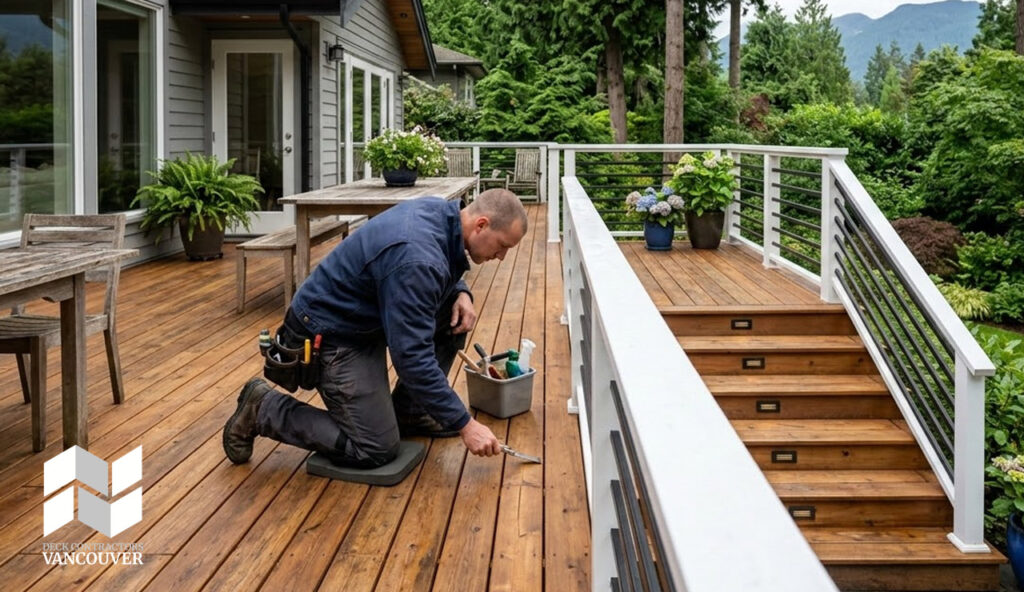
This guide covers everything you need to know to protect your deck for the long haul, from seasonal inspections and proper cleaning techniques to sealing, safety upgrades and knowing when to call a pro. Whether you have a wood, composite or PVC deck, the practices here apply to homeowners across Vancouver and the surrounding areas who want to get the most out of their outdoor living space.
Why Deck Maintenance Matters More Than You Think
Most homeowners only think about their deck when something goes wrong. A cracked board here, a wobbly railing there and suddenly what could have been a $50 fix turns into a $3,000 repair or a full replacement costing $15,000 or more. One afternoon of basic upkeep each year is genuinely all it takes to keep those numbers from ever showing up on your radar.
Vancouver’s climate makes this even more critical. The combination of heavy rain, freezing winters and humid summers is one of the harshest environments a deck can face. Moisture works its way into untreated wood, rot sets in quietly, and by the time you notice it the damage has already spread. Think of deck maintenance less as a chore and more as protecting an outdoor room that adds real, measurable value to your home and one that will keep paying you back for years.
Start With a Thorough Deck Inspection
Before you clean, seal or repair anything, walk your deck slowly and look at it the way a home inspector would. Most problems that turn into expensive headaches started as small, easy-to-miss warning signs. Catching them early is the whole game.
A good inspection takes less than an hour and costs nothing. Do it every spring, ideally right after winter, when weather stress is most visible. You will be surprised what a careful eye turns up once you actually start looking.
Check the Structural Foundation First
The ledger board, the piece that connects your deck to your house, is the most important thing to check. Look for gaps, separation from the wall, or any sign that water has been sitting behind it. If the flashing is missing or damaged, water gets in and rot follows fast. This is the number one cause of serious deck failures.
From there, move to the joists and beams underneath the deck. Press a screwdriver firmly into any area that looks discolored or soft. Healthy wood resists the pressure. If the tip sinks in with little effort, you have rot that needs attention before it spreads to surrounding boards and framing.
Grab every railing section and give it a firm shake. A solid railing should not move at all. If it does, that is not just a cosmetic issue, it is a safety issue. Wobbly railings almost always point to corroded fasteners, rotting post bases, or connections that were never properly secured to begin with.
Look for Surface and Hardware Damage
Walk the entire deck surface slowly and look for cracked, warped or splintered boards. Warped boards are more than an eyesore, they trap water in uneven gaps and accelerate the deterioration of everything around them. Mark anything suspicious with chalk so you do not lose track of it.
Get down and look closely at your screws and fasteners. Raised or popped fasteners are a tripping hazard, and rust stains spreading out from a screw head are a clear sign the hardware underneath is corroding. Swap out rusted fasteners for hot-dipped galvanized or stainless steel versions, as they last significantly longer in wet climates like Vancouver.
Finally, give your stairs extra attention. They take more wear than any other part of the deck and are where most accidents happen. Check that every step feels solid underfoot, that handrails do not flex when grabbed, and that the overall height and spacing meet BC building code requirements. If anything feels off, fix it before the season starts.
How to Clean Your Deck the Right Way
A dirty deck ages faster than it should. Debris and organic matter trapped between boards hold moisture against the wood, and that moisture is what leads to rot, mold and costly repairs over time. Cleaning is not just about appearances.
Plan on a thorough clean at least once a year, ideally in spring before heavy use begins. If your deck gets a lot of shade or leaf coverage, a second round in the fall will go a long way toward protecting it through Vancouver’s wet winter months.
Basic Cleaning That Makes a Real Difference
Start simple. Sweep the entire surface and pay close attention to the gaps between boards, where leaves, dirt and debris tend to pack in and stay wet long after rain. That buildup is one of the main reasons decks develop mold and rot, and removing it regularly costs nothing but a few minutes of your time.
Move all furniture and planters off the deck before you start. Underneath them is where moisture problems often hide, especially if items have been sitting in the same spot all season. Check those areas carefully for soft spots, discoloration or early signs of mold before you start washing.
When it comes to brushes, material matters. A stiff natural fiber brush works well for wood decks, while composite boards do better with a medium nylon brush to avoid surface scratching. Using the wrong brush can damage your deck’s finish or texture, so it is worth taking a moment to match the tool to the material.
Pressure Washing Tips and Warnings
A pressure washer can make an old deck look new again, but it can also do real damage if used carelessly. Keep the pressure setting as low as possible while still getting the job done, and never stop moving the nozzle. Holding it in one place even briefly can gouge wood fibers and leave visible marks.
Hold the nozzle at least 12 inches from the surface and always spray in the direction of the wood grain, never against it. If you are unsure how your deck material will respond, test on a hidden corner first. Some wood species and older composite boards are more sensitive than you might expect.
If you do not have access to a pressure washer, a garden hose with a strong spray attachment and a good deck brush will get the job done. It takes more effort, but it carries zero risk of surface damage. Either way, time your cleaning a day or two before you plan to stain or seal, so the wood is clean, open and ready to absorb the finish properly.
Tackling Stains, Mold and Mildew
For mold and mildew, a simple mix of equal parts white vinegar and water is an effective and affordable starting point. For tougher stains, add a cup of baking soda to the mix. For grease spots, warm water and dish soap applied with a brush usually does the job without needing anything stronger.
Commercial deck cleaners are more powerful and worth using when DIY solutions are not enough, but always choose a product that is formulated for your specific decking material. Using a cleaner designed for wood on composite boards, or vice versa, can strip finishes or leave residue that causes long-term discoloration.
Whatever cleaner you use, rinsing thoroughly at the end is just as important as the scrubbing itself. Leftover cleaning solution sitting on the surface can damage your deck’s finish, interfere with stain absorption and leave a chalky residue once it dries. Rinse generously, let the deck dry fully for at least 48 hours, and only then move on to sealing or staining.
Deck Maintenance Tips for Wood, Composite and PVC Decks
Not all decks are maintained the same way. The material your deck is made of determines how much time, effort and money you will spend keeping it in good shape year after year. Understanding what your specific deck needs is the starting point for doing the job right.
The good news is that all three common decking materials are manageable with the right routine. Whether you have a classic wood deck or a modern composite or PVC surface, a consistent annual approach will extend its life significantly and help you avoid unexpected repair costs.
Wood Deck Maintenance
Wood decks reward the homeowners who look after them, but they do require real commitment. Sanding and sealing are not optional extras, they are the core of what keeps a wood deck alive. Plan on cleaning and sealing every one to three years depending on wear, and sanding whenever the surface feels rough or before applying a new coat of finish.
The type of wood matters when it comes to how much care is needed. Pressure-treated lumber is widely used and durable but still needs sealing to protect against UV rays and moisture. Cedar and redwood have natural rot resistance but benefit from annual sealing to maintain their color and prevent surface cracking. Exotic hardwoods like ipe can last decades but require specific oil-based finishes and a bit more patience during application.
A simple way to know when your wood deck needs resealing is the water bead test. Splash a small amount of water onto the surface. If it beads up and rolls off, the sealant is still doing its job. If the water soaks straight into the wood, it is time to reseal. A well-maintained wood deck can last 15 to 20 years. One that is consistently neglected may need full replacement in under 10.
Composite Deck Maintenance
Composite decking is often sold as a low-maintenance option, and that is largely true, but low maintenance does not mean no maintenance. Dirt, pollen and organic debris can still accumulate on the surface and in the grooves between boards, leading to mold growth and surface staining if left unchecked. A thorough clean twice a year keeps those issues from taking hold.
Use a soap and water solution with a soft to medium brush, and always follow the manufacturer’s cleaning guidelines for your specific product. Avoid harsh chemicals or abrasive scrubbing tools, as these can damage the protective outer shell that gives composite boards their durability and fade resistance. That shell is what separates modern composite decking from earlier generations of the product.
Check fasteners and joints annually, especially at the ends of boards where expansion and contraction from temperature changes can loosen connections over time. When it comes to warranties, most quality composite brands offer coverage for fading, staining and structural defects, but warranties typically do not cover damage from improper cleaning, impact, or neglected maintenance. Keeping a simple record of your annual upkeep is a smart habit in case you ever need to make a claim.
PVC Deck Maintenance
PVC decking is the easiest of the three materials to care for. It does not absorb moisture, it will not rot, and it never needs sanding or sealing. A basic clean with soap and water once or twice a year is genuinely all most PVC decks require to stay in good condition. For homeowners who want beautiful outdoor space without the upkeep burden, PVC is hard to beat.
One thing worth watching in Vancouver is heat buildup on PVC surfaces during sunny stretches. Lighter colored boards handle this better than dark ones, and adding a pergola or shade structure above the deck can make a meaningful difference in surface temperature and long-term comfort. PVC is durable, but prolonged intense heat can cause minor expansion and surface softening over time.
As with any deck material, do a quick annual check of all fasteners and structural connections. PVC boards expand and contract more noticeably than wood with temperature swings, so loose connections are worth catching early. The good news is that PVC holds its color and finish exceptionally well under both rain and UV exposure, making it one of the most weather-resilient options available for Vancouver’s variable climate.
Seasonal Deck Maintenance for Long-Term Durability
Your deck faces completely different threats depending on the time of year, and treating maintenance as a seasonal habit rather than a once-in-a-while task is what separates decks that last 20 years from ones that need replacing in 10. In Vancouver, where rain, freezing temperatures and summer UV exposure all take their toll, timing your upkeep around the seasons makes every effort more effective.
Spring is your most important maintenance window. Once winter is behind you, inspect the entire deck for damage caused by freeze-thaw cycles, check fasteners and connections that may have loosened, and clean off any mold or debris that built up over the wet months. If resealing or staining is on your list, spring gives you the dry conditions and moderate temperatures that produce the best results.
Fall is your chance to set the deck up for survival. Clear all leaves and organic debris, since a thick layer of wet leaves sitting on your deck through winter acts like a sponge pressed directly against the wood. Remove or cover furniture, trim back any plants touching the deck surface, and check that water drains off properly rather than pooling in low spots or corners.
The simple habit of doing a focused check each spring and each fall catches small problems before they grow into expensive ones. A loose board tightened in October costs nothing. That same board left through a Vancouver winter can mean rot, structural damage and a repair bill that could have been entirely avoided.
Seasonal Deck Maintenance for Long-Term Durability
Spring is your most important maintenance window of the year. Once winter is behind you, walk the entire deck and look for boards that cracked or shifted during freeze-thaw cycles, check that all fasteners and connections are still tight, and clear off any mold or debris that accumulated through the wet months. Make sure water is draining off the surface properly and not pooling in corners or low spots, since standing water after rain is one of the fastest ways to accelerate wood deterioration. If resealing or staining is on your list, spring gives you the dry conditions and moderate temperatures that produce the best results.
Fall maintenance is equally important, especially in Vancouver where the rainy season arrives hard and fast. Before temperatures drop, remove all furniture, planters and any items sitting directly on the deck surface. Wet leaves and organic debris left on the deck through winter act like a sponge pressed against the wood for months at a time, and that sustained moisture is exactly what rot and mold need to get started. Trim back any plants or landscaping that touch or overhang the deck, since vegetation traps moisture and creates shaded areas where mold thrives.
The simple habit of doing a focused round of maintenance each spring and each fall is what separates decks that last 20 years from ones that need replacing in 10. A loose board caught in October costs nothing to fix. That same board left through a Vancouver winter can mean spreading rot, structural damage and a repair bill that was entirely avoidable. Treat the seasons as your maintenance calendar and your deck will reward you with years of safe, solid outdoor living.
Deck Safety Features Worth Adding
A well-maintained deck that is still unsafe is not a finished job. Anti-slip strips on stairs and high-traffic areas make a real difference on wet surfaces, which in Vancouver means most of the year. Good lighting along stairs and at any level changes is equally important, since poor visibility is one of the most common contributors to deck accidents. Solar and LED options are easy to install, inexpensive to run and last significantly longer than traditional bulbs.
Railings in British Columbia must meet specific building code requirements, including a minimum height of 36 inches and baluster spacing of no more than 4 inches apart. Grab every railing section annually and check that it feels completely solid with no flex or movement. Making safety upgrades part of your regular maintenance routine means you are not just keeping your deck looking good, you are making sure everyone who uses it stays protected.
When to Call a Professional Deck Contractor
There is plenty a motivated homeowner can handle on their own. Cleaning, applying stain or sealer, tightening loose fasteners, and swapping out a damaged board are all reasonable DIY tasks that do not require special tools or technical knowledge. Staying on top of these smaller jobs is actually one of the best ways to reduce how often you need to bring in outside help.
That said, some situations genuinely call for a licensed professional. Structural repairs involving the ledger board, joists, beams or posts should never be guessed at, since mistakes in these areas create safety risks that are not always visible until something fails. Any electrical work, including deck lighting and outlet installations, requires a permit and a qualified electrician in BC. If your deck is showing widespread rot, significant structural movement, or has not had a professional inspection in several years, booking one is money well spent. A qualified deck contractor will catch what an untrained eye misses and can tell you honestly whether targeted repairs will do the job or whether a full replacement makes more sense long term.
Your Annual Deck Maintenance Checklist
Keeping your deck in great shape is much easier when you have a clear plan to follow rather than trying to remember everything from scratch each season. In spring, start with a full structural inspection, check all fasteners and railings, clean the entire surface, and reseal or restain if needed. In fall, clear all debris, remove furniture and planters, trim back vegetation, and confirm drainage is working properly. Each of these tasks takes anywhere from a few minutes to a few hours, and the total annual investment in time is far smaller than most homeowners expect.
The simplest way to make sure nothing gets skipped is to set a recurring reminder on your phone or calendar, one for late April and one for late September. Pair that with a quick photo record of your deck each season so you can track changes over time and catch anything that looks different from the year before. A consistent routine does not just protect your deck, it protects your budget, your family and the long-term value of your home. If you are in Vancouver or the surrounding area and would like a professional eye on your deck this season, the team at Deck Contractors Vancouver is always happy to help.