
The Best Plants for Your Deck in Vancouver
A deck is one of the best investments you can make in your home, and plants are one of the easiest ways to make it feel complete. The right greenery adds color, life, and personality to an outdoor space that might otherwise feel bare or underused.
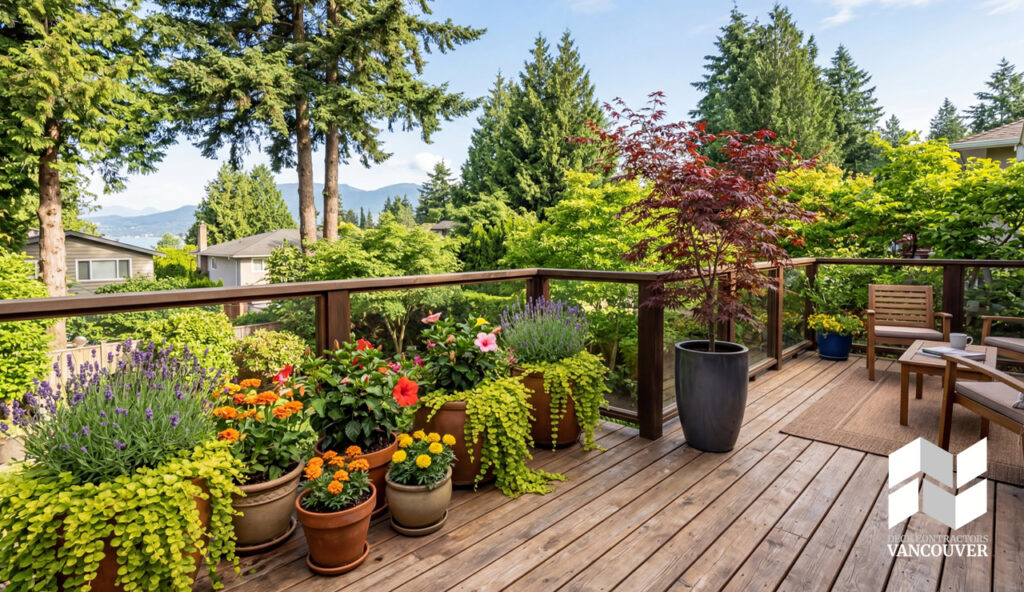
In this guide we cover everything you need to know to choose and care for the best plants for your deck, from figuring out your sun exposure to picking the right containers and keeping everything looking great through the Vancouver seasons.
Why Adding Plants to your Deck is worth it?
A deck without plants is just a platform. Add a few containers of greenery and blooms, and suddenly that same space feels like a destination. Plants soften hard surfaces, bring in color and texture, and make an outdoor area feel intentional and alive. Whether your deck is large or just big enough for a couple of chairs, the right plants can completely transform how it looks and feels.
There is also a practical side to this. People tend to spend more time outdoors when a space feels comfortable and private, and plants help with both. A well-placed planter with tall grasses or bamboo can block an unwanted sightline from a neighbor or the street. And here in Vancouver, the mild and moist climate works in your favor. Many plants that struggle with harsh winters or intense summer heat thrive here, which means more options and less frustration for deck gardeners at any experience level.
What to Think about before you Choose Your Plants?
The first thing to figure out is how much sun your deck actually gets. A south-facing deck in full sun all afternoon calls for completely different plants than a north-facing deck that stays shaded most of the day. Spend a day paying attention to where the light lands and for how long. That single piece of information will save you from buying plants that look great at the nursery but struggle once they are home.
Container size matters more than most people expect. A plant crammed into a pot that is too small will run out of root space quickly, which limits how well it grows and how long it stays healthy. As a general rule, bigger containers also hold moisture longer, which means less frequent watering. If you are planning a deck with multiple planters, think about the long-term growth of each plant, not just how it looks on day one.
It also helps to be honest with yourself about how much time you are willing to spend on upkeep. Some plants need daily watering in summer and regular deadheading to keep blooming, while others are happy with a deep watering twice a week and very little else. Beyond maintenance, take a look at your deck’s color and material. A cedar deck with warm tones pairs beautifully with deep purples and oranges, while a grey composite deck can really pop with bright whites and greens. Letting your deck guide your plant palette is a simple way to make everything feel like it belongs together.
The Best Plants for Your Deck Based on Sun Exposure
Not every plant works on every deck, and sun exposure is the biggest reason why. Once you know whether your deck gets full sun, partial shade, or stays mostly shaded, choosing the right plants becomes much easier and a lot more enjoyable.
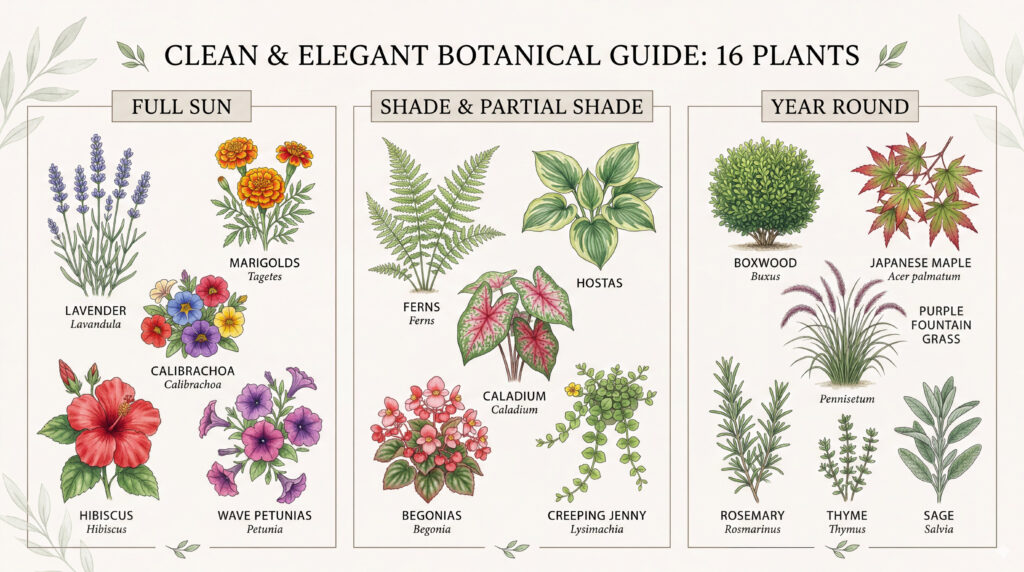
Best Plants for Sunny Decks
If your deck gets six or more hours of direct sun a day, you have a great selection to work with. Lavender brings fragrance and soft purple color while handling heat and dry spells well. Marigolds are hard to beat for continuous bright color through the whole season, and calibrachoa, sometimes called million bells, spills beautifully over the edges of containers and blooms nonstop without much effort. For something with more drama, hibiscus is a standout choice. Its large tropical flowers look striking on a Vancouver deck during the summer months and grow surprisingly well in our climate.
When it comes to keeping sun-loving plants healthy in containers, watering deeply and consistently is the key. Pots in full sun dry out faster than you might expect, especially during warmer stretches. A slow-release fertilizer added to your potting mix at the start of the season will feed your plants steadily without requiring you to remember to fertilize every week.
Best Plants for Shady or Partially Shaded Decks
A shaded deck is not a limitation. It is actually an opportunity to work with some really beautiful and lush-looking plants. Ferns bring an effortless, natural feel and thrive in the moist conditions that Vancouver summers often provide. Hostas are another excellent option, offering bold leaf shapes and a wide range of greens, blues, and variegated patterns. Caladium adds a more colorful punch with its striking leaf markings, and begonias are reliable workhorses in lower-light corners, producing steady blooms without needing direct sun.
For railing planters or elevated containers, creeping Jenny is one of the best trailing plants you can choose. Its bright chartreuse color cascades over the edge of a pot and adds life to spots that other plants might ignore. In shaded arrangements, think about layering heights and textures rather than relying on flowers alone. A tall fern at the back, a medium hosta in the middle, and a trailing creeping Jenny at the front creates a full and intentional look that holds up all season.
Best Year-Round Plants for Vancouver Decks
If you want your deck to look good beyond just the summer months, it pays to include at least a few plants that offer structure and interest through fall and into winter. Boxwood is a classic choice for this. It stays green year-round, holds its shape well in containers, and gives a deck a clean, finished look even when everything else has died back. Japanese maple is another excellent anchor plant. It brings incredible color in the fall and has a sculptural quality that makes it look intentional and striking even without leaves.
Ornamental grasses like purple fountain grass add movement and texture that most flowering plants simply cannot. Rosemary, thyme, and sage are worth including not just because they look great in containers but because you can actually use them in the kitchen. They handle Vancouver winters reasonably well when given good drainage, and that is the key point for any plant staying outdoors through our wet season. Root rot is the main risk, so choosing containers with proper drainage holes and avoiding heavy, compacted soil will go a long way toward keeping your plants healthy right through to spring.
How to Arrange Plants on your Deck for the Best Look?
One of the easiest ways to create containers that look professionally put together is to follow the thriller, filler, spiller formula. The thriller is a tall or bold plant that draws the eye upward, like a hibiscus, an ornamental grass, or a Japanese maple. The filler is a medium-sized plant that rounds out the middle of the pot, such as begonias or marigolds. The spiller is a trailing plant that cascades over the edge, like creeping Jenny or calibrachoa. Put all three together in one container and you get a planting that looks full, layered, and intentional from every angle.
Height variation across your deck matters just as much as what goes inside each individual pot. A deck where every planter sits at the same level tends to look flat. Try mixing tall statement containers with lower wide ones, or use plant stands and deck railings to bring some pots up higher. This creates a sense of depth that makes even a small deck feel more dynamic and thought through. It also helps every plant get a fair amount of light without taller ones constantly shading out the smaller ones beside them.
When it comes to placement, grouping a few planters together near a seating area tends to feel more intentional than spreading single pots evenly around the perimeter. Clusters create a focal point and make the space feel designed rather than random.
That said, lining the railing with a consistent row of matching planters works really well for privacy and for framing the view. For the pots themselves, try to stay within one or two materials and a consistent color family. Matching your pot style to your deck material, whether that is warm wood tones, cool grey composite, or painted railings, ties the whole outdoor space together in a way that feels cohesive and considered.
Tips for Keeping your Deck Plants healthy all Season
The single biggest mistake people make with container plants is watering a little every day instead of watering deeply a few times a week. Shallow watering keeps moisture near the surface, which encourages roots to stay shallow and makes plants less resilient during dry spells. Water until you see it draining out the bottom of the pot, then let the top inch or two of soil dry out before watering again. When it comes to soil, always use a quality potting mix made for containers. Regular garden soil compacts quickly in pots, restricts drainage, and makes life much harder for your plants.
Feeding your deck plants through the season does not need to be complicated. A slow-release granular fertilizer mixed into your potting soil at the start of spring will carry most plants through summer with very little extra effort. As fall arrives in Vancouver, think about which plants can stay outside and which ones need to come in. Hardy options like boxwood, ornamental grasses, and most herbs handle our wet winters well with basic care. Tender plants like hibiscus or caladium are worth bringing indoors before the first cold snap if you want to enjoy them again next year.