
The Best Outdoor Furniture for Your Deck in 2026
A deck is one of the best investments you can make in your home, but the furniture you put on it determines whether it actually gets used. I have worked with homeowners across Vancouver and the Lower Mainland who built beautiful decks and then struggled for years to find furniture that truly fit the space, the climate, and the way they live. The right outdoor furniture does not just fill a deck, it completes it.

In this guide I walk you through everything worth knowing before you shop, from choosing the right materials for our rainy Pacific Northwest climate, to sizing furniture correctly for your deck dimensions, to arranging pieces in a way that makes the space feel like a natural extension of your home. Whether you are furnishing a brand new deck or replacing pieces that have seen better days, the information here will help you make confident choices that last.
Why your deck deserves the Right Furniture?
A deck without the right furniture is just a platform. I have seen many beautifully built decks sit empty for years simply because the owners never found furniture that truly fit the space. The right pieces turn that platform into a room without walls, a place where people naturally gather, linger, and come back to the next day.
Not all outdoor furniture is designed with a deck in mind. Patio furniture built for concrete or flat stone behaves very differently on a wood or composite surface, where leg width, weight distribution, and leveling all matter. The surface your deck is made of should be one of the first things you consider before choosing a single chair or table, because the wrong match can scratch your boards, create instability, or simply look out of place from day one.
What to Consider before you Shop for Outdoor Deck Furniture?
Before buying anything, I always recommend measuring your deck carefully and thinking about scale. A large sectional on a small deck will block movement and make the space feel cramped, while a tiny bistro set on a generous deck will look lost and underused. The shape of your deck matters too. Rectangular decks tend to work well with linear furniture arrangements, while square or wraparound decks often benefit from modular or corner pieces that use the space more efficiently.
Think honestly about how many people will regularly use the space, not just on special occasions but on a typical evening or weekend. A deck used daily by a family of four has very different needs than one used occasionally for entertaining. Getting the seating capacity right from the start saves you from buying again in a year or adding mismatched pieces that never quite look right together.
Here in Vancouver and the Lower Mainland, weather plays a bigger role in furniture selection than most people expect. We deal with long rainy seasons, occasional strong winds, and summer UV exposure that can fade and crack the wrong materials within a single season. On the budget side, I find that mid-range furniture in the right material almost always outperforms cheap furniture over time, so I encourage people to think of outdoor furniture as a multi-year investment rather than a seasonal purchase.
The Best Materials for Outdoor Furniture on a Deck
Choosing the right material is probably the single most important decision you will make when furnishing a deck. I have seen beautiful furniture deteriorate in one or two seasons simply because the material was not matched to the climate or the way the deck is actually used.
| Material | Durability | Maintenance | Best For | Climate Fit (Vancouver) | Price Range (CAD) |
|---|---|---|---|---|---|
| Aluminum | ⭐⭐⭐⭐⭐ | Very Low | Dining sets, loungers, conversation sets | ✅ Excellent |
~$600 – $3,500+ Entry sets from $600; mid-range $1,000–$2,000; premium $2,500+ |
| Teak & Hardwood | ⭐⭐⭐⭐⭐ | Moderate | Dining tables, lounge chairs, benches | ✅ Very Good |
~$1,000 – $9,000+ Chairs from $700; dining sets $2,000–$5,000; premium sectionals $5,000+ |
| Resin Wicker | ⭐⭐⭐⭐ | Low | Conversation sets, lounge areas | ✅ Good |
~$400 – $5,000+ 3-pc bistro sets from $400; conversation sets $800–$2,500; large sectionals $3,500+ |
| Steel & Powder-Coated Metal | ⭐⭐⭐⭐ | Low – Moderate | Dining sets, bistro sets, accent pieces | ⚠️ Good with coating |
~$200 – $3,000+ Bistro sets from $200; dining sets $600–$1,500; premium sets $2,000+ |
Understanding what each material offers, and where it falls short, makes the difference between furniture that lasts a decade and furniture that ends up at the curb.
Aluminum: Lightweight, rust-free and low maintenance
Aluminum is my top recommendation for decks in the Vancouver area, and for good reason. It does not rust, it handles rain and humidity without complaint, and it requires almost no maintenance between seasons. Most quality aluminum furniture comes with a powder-coated finish, which adds a layer of protection against UV fading and surface scratches, and it holds color well even after years of direct sun exposure.
One practical advantage that often gets overlooked is weight. Aluminum furniture is light enough to rearrange easily, which matters a lot on elevated or multi-level decks where moving heavy pieces up and down stairs becomes a real issue. It works beautifully across dining sets, lounge chairs, and conversation sets, and it pairs well with almost any deck finish, from natural wood to composite board.
Teak and Hardwood: Natural beauty that ages well
Teak is one of the few wood species that thrives outdoors without much intervention. Its natural oils repel moisture and resist insects, which makes it genuinely well-suited for a deck environment, especially in a climate with as much rainfall as ours. Fresh teak has a warm honey tone that many people love, and left untreated it gradually develops a soft silver-grey patina that looks equally elegant in the right setting.
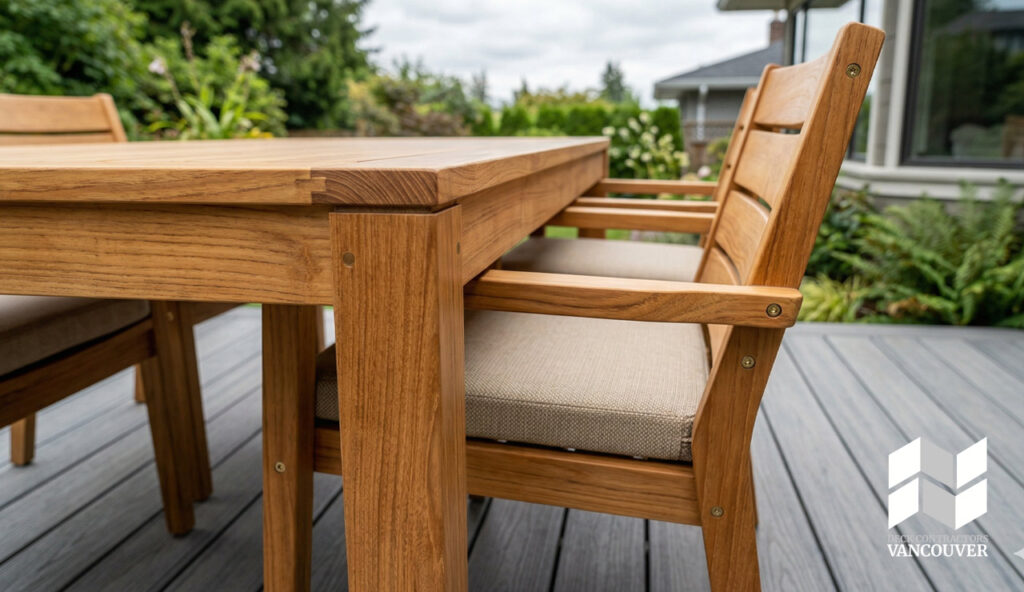
If you want to slow that graying process, a light application of teak oil once or twice a season does the job without much effort. I also recommend looking for furniture certified by the Forest Stewardship Council, which ensures the wood was harvested responsibly. Teak looks especially at home on natural wood decks or composite boards with warm undertones, and it suits both traditional and contemporary home styles well.
Resin Wicker: The all-weather classic
Many people assume wicker is too delicate for a rainy climate, but that confusion usually comes from mixing up natural wicker with PE resin wicker. Natural wicker belongs indoors. Resin wicker, made from polyethylene wrapped around a metal frame, is a completely different product built specifically for outdoor use. It resists rain, UV exposure, and temperature swings without warping, cracking, or fading the way natural materials do.
The main thing to watch with resin wicker is the cushions rather than the frame itself. I always recommend pairing it with cushions that have quick-dry foam cores and solution-dyed fabric, which resists fading and dries much faster after rain. For cleaning, a simple rinse with a garden hose and a soft brush handles most dirt and pollen. If you store it for winter, keeping it under a breathable cover in a shed or garage will add years to its life.
Steel and Powder-Coated Metal: sturdy and stylish
Steel is heavier than aluminum, and that weight is actually one of its biggest advantages on a deck. In areas with strong or gusty winds, steel furniture stays put where lighter pieces might shift or tip over. It also tends to have a more substantial, architectural look that suits modern and industrial deck aesthetics particularly well. The key is making sure any steel furniture you buy has a quality powder-coated finish, since bare or poorly coated steel will rust when exposed to sustained moisture.
One thing I always mention to clients is heat absorption. Dark-colored steel frames can get uncomfortably hot under direct summer sun, so if your deck gets full afternoon exposure, lighter frame colors or adding a shade structure makes a real difference in comfort. Look for furniture that specifies rust-resistant or galvanized construction beneath the coating, which gives you an extra layer of protection and a longer service life overall.
Types of Outdoor Furniture Sets That Work Well on a Deck
Not every furniture set is designed with a deck in mind, and the difference shows quickly once you start living with your choices. I think about deck furniture in three main categories, each serving a different purpose and suiting a different type of space. Knowing which category fits your deck before you shop will save you a lot of time and second-guessing.
Dining Sets for Decks
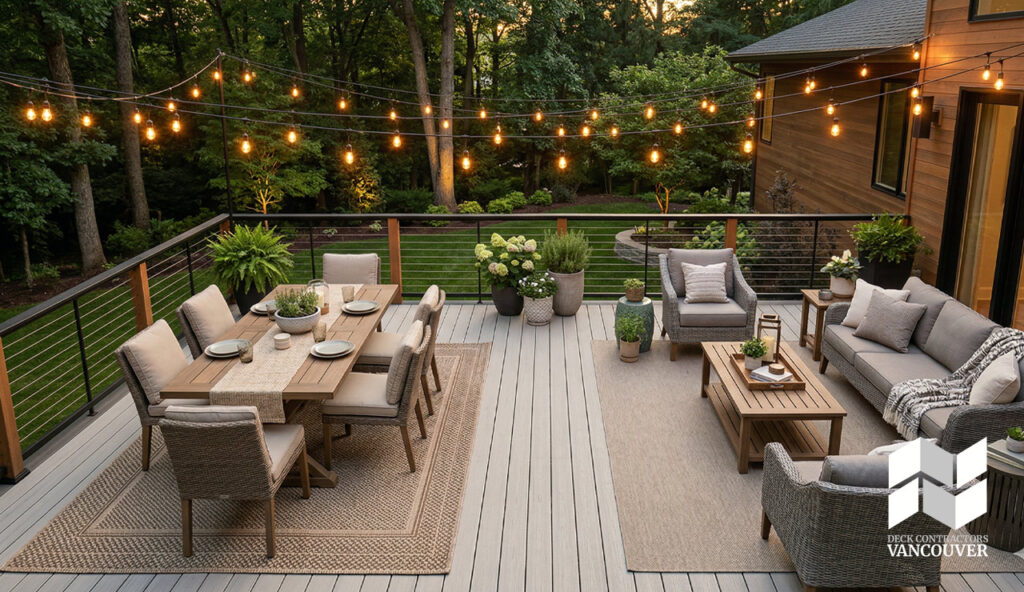
Table shape matters more than most people realize when it comes to deck dining sets. Round tables work beautifully on square decks and in corner spaces because they eliminate sharp edges and allow conversation to flow naturally around the table. Rectangular tables suit longer, narrower decks well, but I always caution people to leave at least three feet of clearance on all sides so chairs can pull out comfortably without hitting a railing or wall.
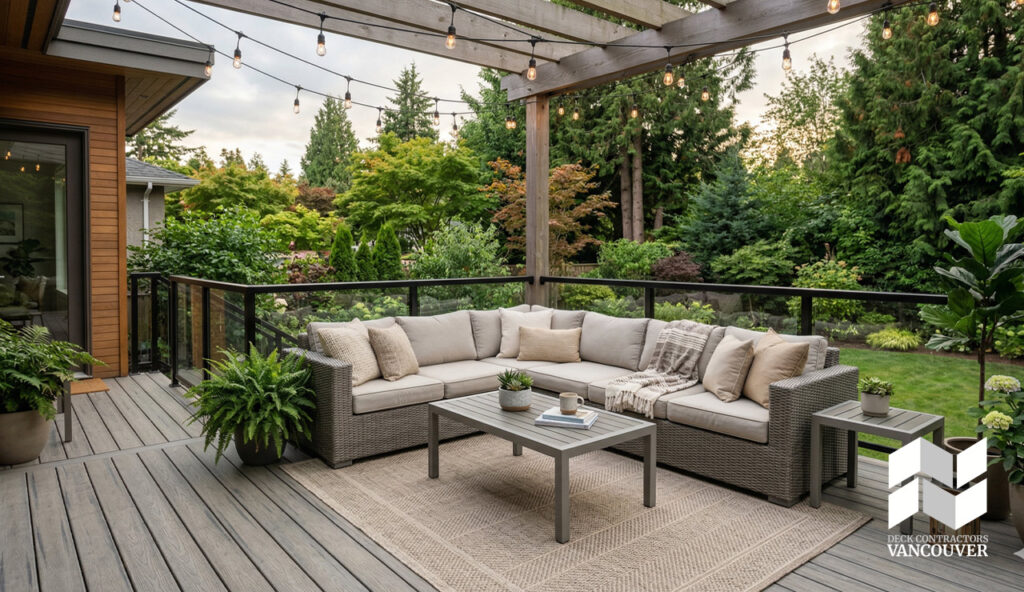
One detail that gets overlooked constantly is leg width. Thin tapered legs can slip between composite deck boards or get caught in the gaps of wood decking, which creates instability and can scratch the surface over time. Look for furniture with flat base feet or wider leg profiles that sit cleanly on top of the boards. If you entertain regularly, an expandable dining table is worth every extra dollar, and I also recommend checking whether the table includes a pre-drilled umbrella hole, since adding shade to a dining area makes a significant difference in comfort during Vancouver summers.
Lounge and Conversation Sets
A well-designed deck often has two distinct zones, one for dining and one for relaxing, and a lounge or conversation set creates that second zone beautifully. The key is to treat it as a separate room within the deck, anchored by a coffee table and framed by the seating arrangement rather than by walls. An outdoor rug underneath the set goes a long way toward defining that space visually without any permanent changes to the deck surface.
When choosing between a sectional and individual chairs, I generally recommend individual chairs or a sofa-and-chair combination for smaller decks, since they offer more flexibility when you need to rearrange or move pieces inside for winter. Sectionals work wonderfully on larger decks but commit you to a fixed layout. Pay attention to coffee table height as well. It should sit within a few inches of the seat height of your chairs or sofa so that reaching for a drink or setting something down feels natural rather than awkward.
Bistro Sets for Smaller Decks
A bistro set is one of the smartest choices you can make for a compact deck, a side yard space, or an upper-floor balcony. Two chairs and a small round table take up a fraction of the footprint that a full dining set requires, yet they create a genuinely functional and inviting spot for morning coffee or an evening glass of wine. I recommend them without hesitation for any deck under about 100 square feet where a larger set would simply overwhelm the space.
If you need to store furniture over the winter or move it frequently, look for a folding bistro set with a powder-coated steel frame, since these pack down flat and can be tucked into a shed or garage with minimal effort. On the style side, pay attention to how the finish and color of the set coordinates with your deck railing and your home exterior. A bistro set that fights with its surroundings will always look like an afterthought, while one that complements the existing tones will look like it was always meant to be there.
The Best Outdoor Furniture for Deck Use in Canada’s Climate
Vancouver’s climate is one of the more demanding environments for outdoor furniture in the country. We get long rainy seasons from October through April, followed by summers with strong UV exposure that can fade and crack the wrong materials within a single season. That combination of sustained moisture and intense sun puts real stress on furniture that was not built to handle both.
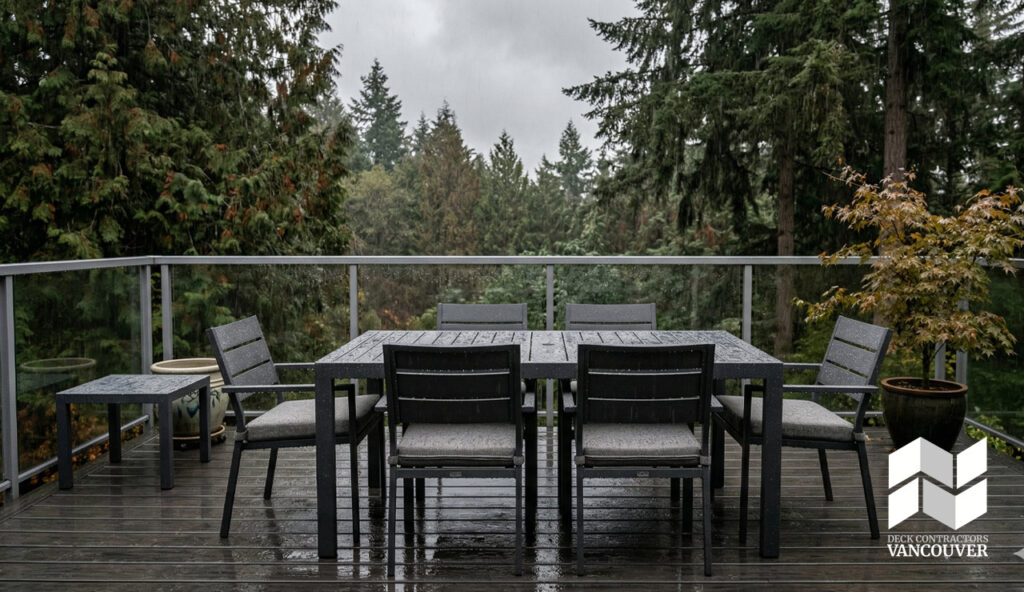
Freeze-thaw cycles are another factor that rarely gets discussed in buying guides written for warmer markets. When moisture seeps into joints or unsealed wood and then freezes overnight, it expands and causes splitting, cracking, or compromised welds. Powder-coated aluminum, PE resin wicker, and FSC-certified teak handle these cycles far better than cheaper alternatives.
Cushion quality deserves as much attention as the frame itself in a high-rainfall environment like ours. Quick-dry foam cores paired with solution-dyed acrylic fabric make a meaningful difference through a wet Vancouver season. When shopping online, look for terms like UV-stabilized or Sunbrella-grade rather than the vague label weather-resistant, which can mean almost anything depending on the manufacturer.
How to Choose the Right Size Furniture for Your Deck?
The general rule I follow is to leave at least three feet of clearance around all furniture pieces so that walkways stay safe and chairs can move freely without hitting railings or walls. Before buying anything, I strongly recommend mocking up the layout on your deck using painter’s tape on the boards or a garden hose to outline the footprint of each piece. It takes twenty minutes and saves you from a very expensive mistake.
On a smaller deck, fewer and leaner pieces almost always look better than trying to fit everything in. On a larger entertaining deck, the risk runs the other way, where furniture that is too small gets lost in the space and fails to create any sense of warmth or definition. If your deck was built with integrated bench seating along the railing, factor that into your plan before buying additional chairs, since built-in seating often covers more capacity than people realize.
Cushions, Fabrics and Comfort Features Worth Knowing About
The fabric choice on outdoor cushions matters far more than most people expect. Solution-dyed acrylic, most commonly known by the brand name Sunbrella, has color woven into each fiber rather than applied to the surface, which means it resists fading dramatically better than standard polyester after a full season of UV exposure. Polyester cushions may look identical in the store, but they tend to fade, pill, and retain moisture in ways that solution-dyed acrylic simply does not.
Fast-drying foam cores are equally important in a climate like Vancouver’s, where cushions can get wet multiple times a week during the rainy season. Open-cell foam dries in hours rather than days, which prevents mold and keeps cushions feeling fresh throughout the season. I also recommend checking for Velcro straps or fabric tie-downs on any cushion set, since even a moderate breeze on an elevated deck can send loose cushions across the yard or over the railing.
How to Arrange Outdoor Furniture on a Deck?
I always start a deck furniture layout by identifying three things before moving a single piece into place: where people will dine, where they will relax, and how they will move between those areas and the door. Keeping access paths clear and separating the dining zone from the lounge zone makes the deck feel organized and intentional rather than crowded. From there, I orient each zone relative to the best view, the afternoon sun angle, and any neighboring properties that affect privacy.
Outdoor rugs are one of the most underused tools for defining zones on a deck without making any permanent changes to the surface. A rug placed under a conversation set immediately signals that area as a distinct space, the same way a living room rug anchors a sofa grouping indoors. For evening use, think about lighting in relation to where people will actually be sitting rather than placing it as an afterthought. A well-placed string light overhead or a floor lamp beside a lounge chair does far more for the atmosphere and functionality of the space than a single overhead fixture ever will.
Caring for Your Outdoor Deck Furniture Year Round
A simple seasonal routine makes a significant difference in how long outdoor furniture lasts. In spring, I recommend wiping everything down, checking joints and hardware for any winter damage, and reapplying teak oil or sealant where needed before the season begins. Through summer, a quick rinse with a garden hose every few weeks keeps pollen, bird droppings, and salt air from building up on frames and fabric. In fall, removing cushions, cleaning all surfaces, and doing a final inspection before winter storage sets everything up for a much easier spring setup.
Cleaning methods vary by material and using the wrong approach can cause more damage than the dirt itself. Aluminum and steel frames do well with mild soap and warm water applied with a soft cloth. Teak responds well to a gentle scrub brush with soapy water, followed by a light sanding if the grain starts to feel rough. Resin wicker is the easiest of all since a hose and a soft brush handle almost everything without any special products required.
Furniture covers can be genuinely helpful or quietly damaging depending on how you use them. A breathable cover on a dry piece of furniture protects it well through winter, but sealing a damp frame or cushion under a non-breathable cover traps moisture and accelerates mold and rust. As for replacement, I tell people to watch for deep cracks in wood joints, rust beneath the coating on metal frames, or fabric that has gone stiff and brittle, since those are signs that maintenance will no longer be enough.
Common Mistakes to Avoid When Furnishing a Deck
The most common mistake I see is buying furniture without accounting for the actual usable space on the deck. People measure the total deck area but forget to subtract the space taken up by door swings, railing posts, and the foot traffic paths that need to stay clear at all times. Leg design is another detail that trips people up regularly, since thin tapered legs can drop into the gaps between composite deck boards and become nearly impossible to move without scratching the surface.

The second category of mistakes involves materials that simply do not belong outdoors. Indoor-grade cushions absorb moisture, develop mold quickly, and break down within a single rainy season, yet I still see them used on decks more often than I should. Furniture covers, storage boxes, and shade structures also tend to be forgotten until after the furniture is already in place, when adding them becomes far more complicated than it would have been if planned from the start.
How Your Deck Design Affects Furniture Choices
The structural decisions made when a deck is built have a direct impact on which furniture will work best in that space. Deck board direction, for example, naturally guides the eye and influences how furniture should be oriented to feel aligned with the space rather than fighting against it. Railing height affects sightlines from a seated position, and deck elevation determines how exposed the space is to wind, which in turn affects how heavy or anchored your furniture needs to be.
The finish and color of your deck surface should also inform your furniture selection before you buy a single piece. A naturally stained cedar deck pairs beautifully with warm teak or natural wicker tones, while a painted or composite deck in cooler greys opens the door to cleaner, more contemporary aluminum pieces. Ideally, I encourage homeowners to think about furniture layout during the deck design phase itself, before a single board is laid, because decisions about board direction, built-in seating, and electrical outlet placement are much easier and less costly to make on paper than after the deck is already built. If you are planning a new deck and want to get that coordination right from the start, that is exactly the kind of conversation we have with our clients at Deck Contractors Vancouver.